Showing posts with label economics. Show all posts

Saturday, August 27, 2011

Snehal Manjreka: Mittel-Managing Chinese SMEs

Adaptability to changing economic landscape is more urgent than finance

By: Snehal Manjreka


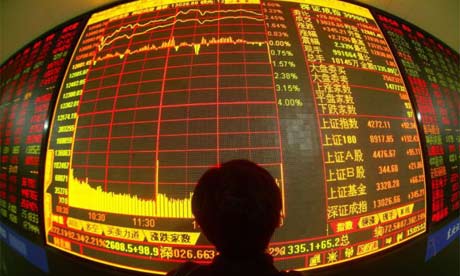
China is continuing to be a mystery to global investors as it has always been. Array of debt fiascos in the EU, US and now Japan has raised global volatility and thus nullified the imminent possibilities of fresh rate hikes in the mainland. However, in a rather contrasting scenario the Finance Ministry’s auctioning of 6 month bill on 8/23/2011 attracted a rate of 6.5%, which has been the highest since December 2006. Bracket together the PBOC’s hike in 1 year bill yield last week by 8 bps to 3.8% is perceived by some market observers as the leading indicator of further tightening in China. On the other hand, slowing net inflows and shrinking maturity of central bank bills is likely to strain Chinese ban funding. According to a Morgan Stanley estimate in July 2011 report, net inflows into Chinese stocks and bonds plummeted by $67bn to $18bn in 2Q2011. Moreover, in comparison to 352bn Yuan in August, an aggregate of 351bn Yuan of central bank bills and repurchase agreements will mature next month with redemptions declining to 298bn Yuan in October, as told by an analyst of China Merchant Bank to Bloomberg.

Now as an SME owner in China how does it feel to be in China when the banks are paying more to access funding themselves? This article will not focus on the eye-popping rates charged to the SMEs in China by the lenders operating in the grey market. The intent of the article is to find solutions that are either fully or near functional. As a matter of fact, the nomenclature of the article is akin to consultation papers open for public opinion.

Traditionally state-owned Chinese banks have preferred to lend to asset-rich and government-backed State Owned Enterprises (Hereafter referred to as SOEs). Apart from being asset-rich and backed by the full-faith of the government SOEs are mainly exchange listed entities and hence it is easier to elicit information about them for due-diligence and other precautionary pre-lending investigation purposes. Moreover growing up as a banker in China has become bit tougher of late especially after reading into the balance-sheet horrors of Western banks during the 2007 credit crisis and the inexorable rise of Yuan loans made after the 2009 stimulus propelled inflation to above government’s official target. Interestingly, the government’s 12th five year plan, which envisages development of a service-oriented economy by cutting heavy reliance on growth achieved through investment and export-oriented model of governance has posed fresh challenges ahead of the Chinese SMEs. The 12th five year plan would accelerate appreciation of RMB and raising labor wages to boost domestic consumption. On the other hand, rising raw material prices and rampant inflation domestically owing to zero-interest-rate policy adopted by the deficit-laden nations has meant running an SME in China a herculean job. This is certainly a different world for Chinese SMEs than the ones they have seen during the early 2000s of low production cost and undervalued RMB (refer to the chart below summarizing the funding difficulties of Chinese SMEs, sourced from China Daily).

Shakeout in the manufacturing mix

Yes, the shakeout that is being witnessed in China’s manufacturing mix is also intensifying the worries of Chinese SMEs. According to a report, authored by Will Freeman of GaveKal Research in Beijing, the share of high-tech products in China's exports has risen from 19 percent in 2000 to 25 percent in 2009. The report duly captures China’s ascendancy in exporting capital equipment in the past decade, which has quadrupled from 2% to 8%. China’s thrust on construction machinery sector is another case in point. A recent Economist Intelligence Unit on Chinese export sector says China is likely to stole a march over Germany and Japan in construction machinery segment as the second largest exporter only after the US by the end of 2011. On the other hand, KHL, an industry magazine, in a global ranking of construction equipment producers for 2011 lists 3 Chinese companies in top 10 by sales revenue (compared to 1 in 2010 and none in 2009). Moreover, major SOEs are now moving up the manufacturing value chain also to decouple from the demand dynamics of the OECD markets, which are susceptible to shocks as witnessed during the global meltdown of 2008. The focus on non-OECD markets augurs good for the wider Chinese economy as supporting the growth story of Brazil, India and South Africa et al offers healthy order book and stable cash flows.

Reading the foreshadow – Does financing really matters?

China’s obsession to high-tech exports, green and solar businesses, High speed trains et al presents a great challenge ahead of the policy makers to re-train millions of migrant Chinese labors who contributed to China’s economic success in the last 30 years. Making low cost commodities (toys, shoes) and assembling mobile and smart phones provided much needed jobs to the less educated class of migrant Chinese labors. Back in 2008 when OECD consumers retrenched their consumption binge close to 20 million migrant Chinese labors working in low commodity manufacturing and assembly plants lost jobs and faced economic hardships. Looking at the prevailing situation one doesn’t need sophisticated forecasting model to chalk-out a prognosis. On 8/25/2011 China Securities Journal mentioned about China easing monetary policy in some sectors and that Beijing would encourage banks to lend more to smaller firms. But such promises often trigger a muted response from the Banking circles. As a matter of fact, the issues gyrating around the SMEs look more to be non-financial. The need of the hour is not to coerce banks to lend money to SMEs that are growing economically unviable owing to changing policy shift and the manufacturing mix. The supportive toolkit, which the SMEs need, is a mix of re-training, consultation followed subsequently by financial backup. Most importantly, consultation on how to adapt to the changing economic landscape (rising wages, inflation, raw material costs) should preclude any financial supportive measures. After all, the great Germany Mittelstands achieved glory not merely by financial support but rather thanks to its ethos of adaptability and constant innovation.

Mentioned below are some of the suggestions to perk-up the Chinese SMEs:

1) Government must ponder over setting up an oversight and advisory committee (comprising a group of officers from existing commercial banks) to organize the functions, operations and accounting structure of the SMEs so as to make them eligible for bank funding.

2) Setting up of credit rating agency assigning credible credit scores to SMEs under the auspices of a respectable watchdog like National Development Reform Commission.

3) Encourage top B-school/ law school graduates to visit and work on real-life case studies on SMEs. The topic could be operational management, labor productivity, Quality management, Financial management, Accounting, business, industrial laws and Succession Planning. This would be a great service to the SMEs as most of them do not have deep pockets to pay top consulting companies for this kind of consultation services. Moreover, this would be an ideal preparation for the SMEs to acclimatize to the dynamic environment the 12th five year plan would unleash in the form of decreased focus on exports and increased focus on service-oriented businesses.

4) Encourage banks to extend financing to SMEs based on the size of their order book or expected future cash-flows. This will free the SMEs off the worries related to absence of fixed assets.

About this author: Snehal Manjreka is a Business Decision Support Officer at CSC and former Senior Analyst at Thomson Reuters. This well-informed financial professional wishes to expand into the area of financial writing. As a guest writer and friend, I'd like to invite you to learn more about this promising young man by viewing his LinkedIn profile.

Thursday, August 25, 2011

Industry Report: Jobs Opportunities Drop 11% for London's Financial Industry


  • 14,000 or 32% of London's financial industry looking for jobs
  • Banks cutting thousands of jobs, creating jobs abroad
  • LSBF offers new Trium program, guarantees full-time job in 6 months

Vacancies for financial jobs in London dropped 11% in July to 4,800 from 5,400 in June. The number of individuals within the industry seeking work reached over 14,000, or 32%. Find out more by clicking the link below.
Jobs Opportunities Drop 11% for London's Financial Industry on Reportlinker

Sunday, August 21, 2011

Snehal Manjreka: US Rating Downgrade


US Rating Downgrade

Snehal Manjreka
8/7/ 11

It is true that the political dogfight hastened the downgrade to a large extent, but I personally believe that the key holders of US debt and US currency pay little attention for such developments. Post financial crisis *astute* and *serious* investors have paid much little attention to credit ratings and their ratings actions. The market now seem to be ahead of the rating curve by getting more independent and intelligent.

I believe the recent panick-stricken selling of US equities is an overreaction from a bunch of bamboozled investors. The primary reason for the sell-off is possibly the diluting size of US corporate profits. As of Friday, the consensus forecast was that the S.& P. 500’s earnings would grow 15.8 percent in the third quarter. That’s off slightly from predictions of 16.7 percent third-quarter growth at the end of June, Mr. Butters said, senior earnings analyst at FactSet. On the other hand, Jeffrey N. Kleintop, chief market strategist at LPL Financial, says he thinks that “the estimates are still too high.” While profits might still grow by double digits, he said, they won’t be the 16 or 17 percent gains built into many analysts’ estimates. I believe this slight slowdown in US corporate profits reflects a conducive trend of squuezed margins due to increased hiring. I believe many manufacturing companies are returning back to the US and hence a subsequent rise in hiring will have a modicum downward impact on profits.

Talking about the S&P rating action as I mentioned above the key stakeholders of US denominated assets (Asian, Middle East nations, UK and Russia) are unfazed by the rating downgrade. Mentioned below are the comments of leading US denominated asset holders as sourced from Bloomberg:

Russia said the one-step cut “can be ignored.” Russia considers U.S. debt reliable and won’t review its policy of investing in the country, Deputy Finance Minister Sergei Storchak said by phone yesterday. The downgrade “can be ignored” for long-term investment strategy, he said. Russia is one of the 10 largest foreign holders of U.S. government debt.

Jordan has “faith” that the dollar and dollar debt “will continue to be the prime benchmark for risk-free debt,” Central Bank Governor Faris Sharaf said yesterday by telephone in Amman. “We are willing to accept U.S. risk even with S&P’s action,” he said.

Lebanese central bank Governor Riad Salameh said “the dollar is a shelter in times of crisis, and we have no plans to cut our dollar holdings.”

Japan, the second-largest international investor in American government debt, sees no problem with trust in the securities, a Japanese government official said on condition of anonymity.

In the U.K., the world’s third-largest foreign holder of U.S. debt, Business Secretary Vince Cable said yesterday the dollar is “the key international currency” in the short run.

South Korea on the other hand has scheduled an emergency meeting to mull over the matter. I have been hearing that the Bank of Korea is buying lot of gold in the market. Probably, to emgineer a slight decoupling from the dollar. But the size of the purchase wasn't big enough to talk about a real decoupling from the dollar as such.

Post this rating downgrade we might see demand for gold rising as central bankers might start shopping for gold in international bullion markets. Global fund managers have been bearish on US denominated assets since quite sometime now. They rather place more faith in US corporate debt than ramping up sovereign bonds holdings. Hence, a slew of negative comments from them should be ignored. I believe the most efficient investors presently existing in financial markets are central bankers. If they are reinstating their faith and trust in US denominated assets then the markets need not indulge in the unwarranted and value-destroying game of panick-selling of financial assets. Watch out for Central bankers and the SWFs for guidance!


About this author: Snehal Manjreka is a Business Decision Support Officer at CSC and former Senior Analyst at Thomson Reuters. This well-informed financial professional wishes to expand into the area of financial writing. As a guest writer and friend, I'd like to invite you to learn more about this promising young man by viewing his LinkedIn profile.

Wednesday, August 10, 2011

China's Response to US Debt Crisis


The article explains how China is reacting to the US and European debt crisis, giving investors some insight as to what to expect. My latest article for ReportLinker is one of my most important pieces for the company. I hope you find this article useful and informative.

China Unable to Release Economy Buffer on Reportlinker

Friday, July 29, 2011

Mining Protests Across Three Continents Threaten Commodity Prices


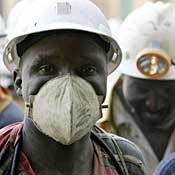
My article for ReportLinker regarding the mining strikes (gold, coal, oil, and diamond industries) in Australia, South Africa, and Brazil. They are demanding higher pay and better work conditions. Although the companies have responded differently, none of the situations have been resolved as of yet.
LINK

UBS to Cut Jobs, Push Back Profit Target


My latest ReportLinker article on Swiss banking and the effects of the European sovereign debt crisis on investment banking.

LINK

Friday, July 22, 2011

Industry Reports: China


My new Industry Reports are available on ReportLinker!

... and it's on China!


VW introduces Kai Li Electric Vehicle to the Chinese Market: Link
Daily Chinese Steel Output Reaches Record in April: Link
Foreign Bank Mutual Funds Are No Match for China's Big Four: Link
China's Inflationary Pressure Begins to Ease: Link
Is China's Trade Surplus Rebalancing?: Link

Industry Report: Airplanes and Airports

My latest industry articles for ReportLinker are now available!
... about the airplane industry!

About Airports

Austrialia's "Airport of the Future" Trials Begins: Link
US May Reduce Security Checks for Low-Risk Passengers: Link
US Air Travel: Will Passengers Pay for Security Checks?: Link

Commentary: While writing these articles I couldn't help but think to myself "What were all these security procedures all about?" Now body scanning will be traded for an increase in other privacy violations using RFID chips. These chips are more of a security risk for the country and for individuals.

About Airplane Engines
Pratt and Whitney, GE Aviation To Launch New Turboprop Engines: Link
Nextant Aerospace Announces Engine FAA Certification: Link

Saturday, April 16, 2011

Government Intervention and The Online Poker Industry


Just as Full Tilt Poker reached a new partnership, Full Tilt, Poker Stars, and Absolute Poker web sites are all down! If you don't believe me, try clicking here. Nope, your eyes are not playing tricks on you. These domains have been taken over by the United States government. It doesn't stop there. The executive officers have been arrested and threatened with 30 years in prison if indicted!

What happened? Our story begins in 2006 during the Bush regime. That year the Unlawful Internet Gambling Enforcement Act (UIGEA) was among the many controversial bills passed through Congress and signed into law. Bush stated that the Freedom of Information Act would not ensure the release of the UIGEA documents because of "national security" concerns. Seriously?!! Ever since then some lawmakers, especially Barney Frank and Ron Paul, have been trying to revoke the UIGEA. Internet poker pros became fearful of the possibility that their means of cash flow could be shut down. Well, thankfully no case could be proven against the giants of online poker and all appeared to be safe... until now.

A case has now been brought by a Manhattan attorney against the online poker giants for supposedly "tricking" banks into accepting money for "illegal gambling" and "bank fraud". These are some pretty serious charges if they are true. But considering the fact that online poker is in itself now "illegal" means that all these new charges could be built on that fact alone. The banning of online poker is even more ridiculous than the prohibition of alcohol because online poker is an investment and an asset, not an expense. Now ESPN is considering scrapping its poker coverage involving Poker Stars and Full Tilt players. I wonder what will happen to the hit TV show High Stakes Poker now that it has partnered with Poker Stars?

Why is online poker so dangerous that it has to be illegal in the US? Ever since the turn of the century, poker (and especially online poker) has skyrocketed in popularity with stars like Daniel Negreanu, Tom "Durrr" Dwan, and Phil Ivey as spokespeople. TV programs have emerged that show the Average Joe winning against these poker pros. Online poker sites facilitate the money transaction between poker players wishing to become wealthy pros themselves. One by one these new internet players have popped up on the radar. More and more Americans began forming their own poker dreams and monetary ambitions. If a person invests in learning the basics in poker like poker hands, poker psychology, reading body language, pot odds, outs and percentages, and how to bluff effectively, then that person can make money as a grinder (a relatively safe poker player), a reader (someone who bets on what they think others have as opposed to their own hand), or a gambler (someone who bets based their hand instead even if the odds are stacked against them). Although gamblers win more money in the short run, they can lose it just as easily. Most online poker pros fall in that category. There are a growing number of grinders who MAKE A LIVING through ONLINE POKER. These players are the ones who will lose the from this new controversy. I think poker grinders are the real risk to the US government, or rather, to the non-federal Federal Reserve. Financial independence is not profitable for debt investors, especially the Fed who makes a profit from printing debt.

What options are there for online poker players? Well, if you are a poker player who can read your opponents well, you will probably do well in live cash games and live tournaments. For those who have never played live and do not yet have the bank roll to try, you are safe... for now. If you already have an account with Ultimate Bet (UB) or Absolute Poker (AP), your cash account has not been closed. You can continue to play for money even though you are an American; however, they will not allow you to withdraw or start a new account due to the massive uncertainty. I think after all this mess, online play will continue in America and the sites that are temporarily not allowing US players will once again pursue American clients. Until then, Carbon Poker is allowing US players to start new accounts. I'm sure there are others who are too.

There is no way the government can win this case. If they do, that will be the end of online poker and maybe eventually an end to all forms of "gambling". Where is the line drawn? Online wager transfer could include, in theory, online horse racing, fantasy sports, and lotteries. This is protectionism at its very worst! As a result of this law, the US government is in conflict with the World Trade Organization (WTO). Now Europe is considering doing the same to American companies. Wow, what a great way to get out of a global recession... by limiting global trade and commerce! This is why taxing them (also known as a tariff) is a bad idea: it will cause retaliation against American companies from any, and all, industries. Casinos based in other countries do not (and should not) pay American taxes, nor do Las Vegas casinos pay foreign taxes. So why should Full Tilt or Poker Stars who also have American customers? Online casinos are NOT FROM AMERICA, but they DO pay taxes... in their HOME COUNTRY. Americans who win the lottery, the slot machines, or a poker game all have to pay taxes on their winnings... so why should the Fed care? Some individuals fail to report their winnings but that should not be an excuse to close down the whole online poker industry. Instead those who lied should be the ones held accountable. Shouldn't individuals have the right to choose how they invest their money? Hell, I think investing in poker (once you know the basics) is safer than investing in retirement and long-term stocks. As you can tell, I am steaming. But don't try to steal my pot, the government doesn't like competition.

Friday, March 18, 2011

Rating Professional Networks + 2 Handy Tools


(Yes this image is from Scooter's Nessaja) ;P


I spent the day checking out professional sites for those who need a job... because I need a job. I stumbled across a few really handy sites and have decided to give a rating for each site. I applied to all of them and played around with their features. I hope this helps in your job search.


LinkedIn

This is THE professional network to use. Your professors, past employers, coworkers, and friends are all there. There's so much to do there... it's almost like having a business Facebook.
I give this site:
\bigstar\bigstar\bigstar\bigstar\bigstar

Vault
I have to admit that this site LOOKS impressive; however, substance comes at a cost. This site has a lot of resources but minimal tools to make your internet resume stand out. In order to add any cool features to your profile, you have to upgrade. For that, and the limited spaces available for the experience section, I give this site:
\bigstar\bigstar

Jobster
Pros and cons of using this site. Cons are very few but include: confusing tabs and ugly site graphics. Most importantly, you can't add groups and companies to follow. The pros outweigh most of the cons though. You have the most options for your profile out of any other site, including Linkedin. You can add video resumes, portfolios, links, and answers to typical interview questions (which no other site has). Overall it's a really, really good site. This is why I give it:
\bigstar\bigstar\bigstar\bigstar

uBoast
Although Uboast is also not very pretty, it is very thorough. It allows for video resumes, portfolios, links, and favorite quotes. It has more networking options than Jobster but isn't as handy for those trying to hire you. I give it:
\bigstar\bigstar\bigstar\bigstar

MyWorkster
MyWorkster is the most like a social network. It even has the chat bar on the bottom. You can search for people just like you. You can add video, music, image, and text files to your portfolio. The profile looks professional too. My only complaints are that there are no groups on MyWorkster and that there are no interview questions. Overall I give this site:
\bigstar\bigstar\bigstar\bigstar

VisualCV
VisualCV is visually appealing and allows for graphs, text, photos, and videos. It is the least social of all the professional networks. It is easy to use and the profile graphics are simplified as to appeal to most employers. Overall, this deserves:
\bigstar\bigstar\bigstar

ResumeTube
This isn't a social professional network. This is an online video resume site. As it is not like the above sites I will not rate it. It is just a handy tool that I thought I'd pass on.

CareerTV
This is not a place to put your video resume. It's a site full of advice. I highly recommend this site.

Good luck on the job search!

Thursday, February 24, 2011

SDA Network News: Managing Economic Bubbles Before They Burst


By clicking the image above, you will be directed to my first article as the new Chief Economics Correspondent for SDA Network News. Here's some information about my article:

There are many theories as to what governments should do in order to manage and prevent bubbles and recessions. The US government uses Keynesian economic theories of expansionary economics, but rarely contracts as it should. This is fine during recessions; however, I will demonstrate that a constant expansion of the money supply and steadily growing government is not sustainable in the long-run.

Sunday, August 15, 2010

At Home Genetic Testing: Eugenics Warning


My dad had Fox News turned on the TV and I heard the words "at home genetic testing" and my ears went up and my tail began to wag... well, not literally. I immediately stopped what I was doing and turned the volume up. Walgreens is considering selling a genetic testing kit that is supposed to be as simple as a pregnancy test. The news anchors of course used NLP techniques such as saying things like "and yes, there are SOME concerns" then having the proponent of the device ease the audiences concerns by not addressing the concerns but by stating how safe it really is.
Well Fox News guys, I have some news for YOU. This device MAY in fact be safe, but that is NOT my concern. I know many people will jump at the opportunity of finding out what diseases they are more likely to get because of family traits. I want those of you who are considering using this product to at least know the potential dangers this will have on yourself, your family, and society at large.
Fox News said something quickly that made all the difference in the way I perceived this product. The news anchor stated that the device would be returned to Walgreens and sent to a lab to conduct the test. Well... if it is sent to a lab and all our doctors now have to be certified by the government... (I think you know where I'm going with this.)
In case you DON'T know what I'm referring to, let me tell you what my eye doctor told me a few months ago. Because of the recently passed health care bill all doctors must spend thousands of dollars registering as doctors with the government. They must reapply every few years and update their offices with computers for them to store your data. Everything you tell your doctor is stored on a government-accessible database, thus ending the confidentiality rule all doctors are supposed to abide by.
Now back to the test... When it is sent to a lab what do you think will happen to your data? If the researchers and doctors will be registered with the government, then they will be forced to upload your genetic information into their data banks. The genetic information does not sound as though it can affect you in a negative way though, right?
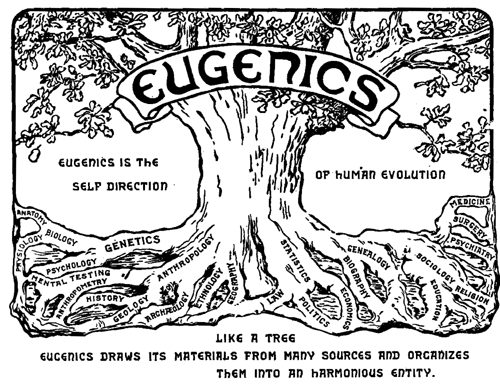
Well around the beginning of the 20th century many scientists in the medical and biological sciences began practicing what is known as eugenics. Here is the Wikipedia article on it. Slowly this false science began seeping into social sciences such as economics, anthropology, and even politics. Well known and respected economics leaders of the time were also eugenicists. Here is the link to many works done by an economics professor at Princeton regarding eugenics in economics and politics. Planned Parenthood was originally a eugenics program (link Here and Here). The Nazis actually got their plan for scientific experiments on Jews, homosexuals, Catholics, and gypsies from American eugenicists. Hitler praised the eugenics programs in America and sought to implement them in Germany. After WWII, eugenics went underground. Most organizations known for eugenics changed their names to mask their agendas. I fear that this information, once in the hands of the government, may one day be used for dictating what a person is allowed to do according to their genetic capabilities and who is allowed to live and mate.
It sounds ridiculous but history has a tendency to repeat itself. I have actually seen scholarships that were offered to students who would support sterilization programs abroad. I do fear that too much government control could easily lead to corruption of this information and the rebirth of American eugenics. If you doubt this, look at the articles I posted above and keep this quote in mind:
"Power corrupts and absolute power corrupts absolutely." -Lord Acton

Friday, August 13, 2010

The Zeitgeist Trilogy

That is the link to possibly the most important movie trio ever made. Zeitgeist and Zeitgeist Addendum are two documentaries regarding ways to defeat the New World Order and the greed that breeds it. Although I disagree with some of what is said in these documentaries, on the whole they are great to share with your families. The Zeitgeist trio (the third one is in production) is less about doom and gloom and more about finding solutions to problems most people wouldn't dream of tackling. The films try to wake people into a state of awareness, concern, and hope for the future. They offer reasonable solutions and say that it is up to the people, not politicians or groups, to solve our problems. They promote true self-awareness, courage and motivation to succeed, and the realization that we are all one energy source and that it takes each of us to become aware of our true self and our true potential. This is a powerful and moving set of documentaries. Please watch at least the first documentary before criticizing these ideas. Open-mindedness through open-hearts are the paths to prosperity and overall well-being.

Sunday, July 25, 2010

How OSS is Helping to Develop Nicaragua

Introduction
Open source software can affordably aid in the development of Nicaragua by providing a variety of services for educational institutions, the government, and local businesses.
Before explaining how Nicaragua can benefit from this technology, the following definitions must be presented in order to clarify the difference between Open Source Software and an Operating System. An operating system, or OS, is a computer’s master control program that sets the standards for every running application (Operating System). Examples of an operating system include, but are not limited to the following: Apple’s OSX Leopard, Microsoft’s Windows 7, Ubuntu 9.10, OpenSUSE, and Debian are all examples of operating systems. Open Source Software, or OSS, can be defined as software that is distributed with its source code so that others may modify the software for their own use (Open Source). Examples of open source software include, but are not limited to the following: Linux operating system, Apache Web server, and Open Office are all examples of open source software. An open source operating system is an operating system that comes with the source code. Such a system would include any distribution of Linux including Ubuntu, Linux Mint, OpenSUSE, Fedora, Mandriva, Debian, and Frugalware.
Linux Tour, which promotes the use of the Linux operating system, has events throughout the year including a Mandriva install party, día Debian, OpenSUSE day, and Software Freedom Day (Eventos 2008). Software Freedom Day is a day in which those who are well acquainted with Linux advertise the benefits of open source software to local businesses and schools (Competition 2008). During this event, Linux users demonstrate how to solve common problems of home users, small businesses, and educational institutions using open source software (Competition 2008). Workshops entitled “Learning by Doing” teach people how to make their own Web sites using Wordpress and how to use the astronomy program Stellanarium (Competition 2008). People can also avail of a free installation of various Linux programs at Linux Tour events (Competition 2008). Software Freedom Day 2008 was streamed live via MarcaAcmeTV and was viewed by people in Nicaragua, Chile, Brazil, Argentina, as well as other regions in Latin America (Competition 2008). As a result of Software Freedom Day, 400 free software discs were distributed and 30 computers had free software installed at the event (Competition 2008).
Because of local groups such as Ubuntu Nicaragua and the Linux User Group and events like Linux Tour, use of open source software in Nicaragua has increased. The following are two graphs demonstrating the increase:

[Source: Grupo Usuario Linux de Nicaragua (Nicaragua’s Linux Group),
This graph reveals how many people in Nicaragua use a form of open source software as their operating system. Although Linux is slightly ahead of Mac, it trails behind Windows. All of the operating systems just below Mac in the list are other open source operating systems. So when one adds all of these together, the percentage is much higher but still way below Windows. The next graph reveals a pattern in open source operating system use in Nicaragua.
From 1994 until 2000, there were almost no Linux users in Nicaragua. From 2000 onward, the trend for Linux use was upward sloping. The amount of Linux users is only 128 according to Linux Counter; however, these are only the number of users who added his or her computer to the registry at Linux Counter. Most people do not register their software. The figure of only 128 Linux users makes little sense and conflicts with the over 21,000 Linux users listed in the first graph. The trend, therefore, is the most important factor of this graph.
[Source: Linux Counter]
The following is some background information regarding Nicaragua’s economy: Nicaragua is the poorest country in Central America and is the second poorest in the Americas behind Haiti (Nicaragua). Around 79% of the population live on less than $2 per day; almost half the population live on less than $1 per day (Nicaragua). Although unemployment was not very high (5.6%) in 2008, underemployment was a staggering 46.5% (World Fact Book). The year 2009 has not been an economically successful one for Nicaragua (World Fact Book). Due to decreased export demand, GDP fell by almost 3% in 2009 (World Fact Book). Public debt was approximately 87% of the GDP in Nicaragua (World Fact Book). Although there are many industries in Nicaragua —including food processing, beverages, footwear, wood, textiles, clothing, petroleum refining, machinery, metal products, and chemicals— agricultural products and raw materials are Nicaragua’s main exports (World Fact Book). Exports from Nicaragua include coffee, sugar, tobacco, gold, beef, shrimp, lobster, and peanuts (World Fact Book). Imports to Nicaragua include consumer goods, machinery and equipment, raw materials, and petroleum products (World Fact Book). Nicaragua imported $1.624 billion more than they exported in 2009 (World Fact Book).
Investing in human capital can be difficult for an under-developed nation (World Fact Book). Of the 5.8 million people living in Nicaragua, only 185,000 of them have internet access (World Fact Book). The lack of internet access could hinder the learning of young children and the operations of a small business. Because many businesses and schools are unable to afford most popular software, they are beginning to experiment with OSS.
Education
Nicaragua is very limited in funds for education (Nicaragua). The Ministry of Education is allowed to use the budget level from 2000 for every year until 2010 due to IMF restrictions (Nicaragua). The salary of school teachers is low (Nicaragua). Schools cannot afford to spend on expensive software when their budgets are being cut.
The Ministry of Education, National Technological Institute, Ubuntu Nicaragua Team, and delegates from the main private and private universities have developed a plan to develop an Ubuntu-based educational system for both public and private schools throughout the country (Nicaraguan Schools Go Ubuntu). Guardabarranco, Nicaragua’s national bird, is now the official name of this education project (20,000 Ubuntu Laptops). In 2009, 20,000 laptops for teachers were distributed with Linux pre-installed (20,000 Ubuntu Laptops). Throughout Nicaragua, there are now 175 public schools with computer labs (Flying on the Wings of Freedom). Their choice of distribution was developed by the government of Extremadura, Spain (Flying on the Wings of Freedom).
Despite this progress, many schools are still limited in their ability to educate their students. Most computer labs only have seven computers for a class of 35 to 40 students to share (Flying on the Wings of Freedom). Some schools in Nicaragua do not have internet access and thus, cannot upgrade their systems (Flying on the Wings of Freedom). The local Linux User Group, or LUG, is supporting one school by upgrading all of their systems to GnuLinEx 2006 (Flying on the Wings of Freedom). The LUG group is also contacting local companies to ask if they are able to donate some hardware for the schools to use in the computer lab (Flying on the Wings of Freedom).
The chart below demonstrates the gradual improvements that can lead to a booming economy over time. For instance, Preschool enrollment has more than doubled (Nicaragua Country Brief). Rural road conditions have improved (Nicaragua Country Brief). The amount of time required to start a business has nearly been sliced in half (Nicaragua Country Brief). Perhaps the most drastic improvement is in regards to technology. The percentage of small, rural towns being connected to public telephones has nearly quadrupled in only five years (Nicaragua Country Brief). If internet usage were made available to follow these trends, a boost in technology and education –and thus output– would occur.
[Source: World Bank]
Kevin Brandes is a software engineering student at the Oregon Institute of Technology (Brandes Part II). Legal versions of Windows sell for little less than they do in the states (Brandes). According to Brandes, Nicaraguans, unlike Americans, do not hold a bias against open source software due to the products being free (Brandes). Nicaraguans are more concerned with what the software can do than what brand they come from (Brandes). Brandes went to Nicaragua to teach people how to use Linux, including how to configure thin clients (Brandes). The thin client aspect allowed Brandes and others to offer affordable systems to rural schools (Brandes). Linux allowed Brandes and his group to use any hardware, including those donated by businesses (Brandes). Keving believes that his most important project to date was running OpenSUSE 9.0 on their diskless clients, which give a clear advantage over Windows when marketing to local schools and businesses (Brandes Part II). According to Kevin, Microsoft inspectors visit internet cafés in Costa Rica to see verify authenticity (Brandes). If this happens to Nicaragua, many more businesses will have to turn to Linux and other free software.
Government
Agriculture is known as the base of Nicaragua’s economy (Wilm). Denis Cáceres of Debian Nicaragua had just begun working with the Mesoamerican Information Service about Sustainable Agriculture when he and a few others began a project to develop an information system for the Ministry of Agriculture, supported by Swedish and Spanish agencies (Wilm). The idea was to combine a Wiki text portion with a Javascript-based statistics portion and put it online so that anyone can access current and historic data (Wilm). The system, entitled ALBAstryde, would be entirely open source so that anyone can have access to the information and edit it as needed (Wilm). Cáceres explained the reason for an open source system was so that the system would grow to someday envelop the whole agricultural sector in a few years (Wilm). No one organization or company has control over the information; and thus, no one can hold Nicaragua hostage (Wilm). Cáceres believes that the next step for Nicaragua is to incorporate the system into every subdivision of the Ministry (Wilm). There has been an enormous surge in desiring free software after the ALBAstryde project (Wilm). Many times, however, there is not enough technical knowledge to use it (Wilm).
The internet is becoming more available in poorer parts of the country (Wilm). As a result, the government has a real opportunity to help their people through the use of open source systems. The person in charge of the informatics department later admitted to the SIMAS team, “You know that we did not really support you from the beginning because we did not trust free software, but now that will have to change. The Ministry and SIMAS need to work together and maybe soon we will migrate to Linux systems, because we see that this system really works (Wilm).” The government is now also using the Linux for its Migration Project (Nicaragua: Open Source).
Roughly 50 desktop computers are being migrated to Ubuntu in various departments (Nicaragua: Open Source). The government has teamed up with Linux User Groups (LUG) for their assistance with these systems (Nicaragua: Open Source). As a result, three team members of Nicaragua’s LUG group have now been employed full-time by the government to give Ubuntu support to users (Nicaragua: Open Source).
Businesses
Blogger LEOGG has been working with LUG and public institutions around Nicaragua to take advantage of the various uses of open source software (Nicaragua: Open Source). In his article “Nicaragua Libre” he explained how he helped the rural town of Jalapa develop and use Linux-based software (Nicaragua: Open Source). In Jalapa, there are two particularly intriguing projects in which LEOGG is involved. One of these is the digitalization of thousands of public records (Nicaragua: Open Source). Fifteen computers are devoted exclusively to using Ubuntu Hardy and XSane for this task (Nicaragua: Open Source). The second project is in relation to adding Ubuntu and a custom-made software for making and receiving payments to 12 cashier booths (Nicaragua: Open Source).
Most recently, Nicaragua’s LUG has been chosen to produce a new technology program on Canal 2, Nicaragua’s largest television network, broadcasted weekly (Nicaragua: Open Source). This new program is beneficial to business owners as it would demonstrate beneficial, new open source technologies. ALBAstryde, the open source program for the Ministry of Agriculture, can greatly benefit businesses as well as the government. Information cannot be held secretively by any organization under such a system (Wilm). If the velocity of knowledge sharing is raised, risk for small businesses will decrease, especially for those in agriculture. This knowledge sharing has the potential to encourage new industries and greater competition.
Policy Implications
Like with everything, there are pros and cons to everything. The following are some pros and cons of using open source software:
To clarify the chart above, the pros and cons must be explained in further detail. Open source software is important to developing nations because it is free. It is also relatively easy to install due to software centers. Software centers or packages come with open source operating systems. These packages have a wide variety of software for educational, business, programming, and science purposes. Open source software is versatile because the source code can be adapted for personal use. Graphical User Interface, or GUI, allows users to cut down terminal and code usage. All of these advantages allow open source software to be used with little trouble.
Unfortunately open source operating systems have frequent errors. To remedy these errors, one must use the terminal. Frequent errors can lead to inefficiency in a business because time is money. Compatibility is not that big of an issue anymore due to changes in updates in software and changes made by Linux. Many companies still consider investing in a Linux-compatible program a waste of time and resources. Until Linux gains more market share, many companies are likely to continue to support only Windows and Mac. Some users will not want to settle for an open source alternative to the software they love. Software attachment could be solved by either demonstrating the similarities between the popular software and the open source equivalent or by simply making the popular software available to those who use Linux.
Open source software is an option for under-developed and developing nations because it is free and relatively easy to use. If a business is hoping to compete globally, more sophisticated, and thus expensive, software is needed. For the majority of small businesses and government programs, however, open source software can lead to rapid progress.
Rapid growth is achieved by higher levels of output in the economy. Output is determined by its inputs. In economics the following formula can be used to summarize the relationship between output and inputs:
Y=f(K,L,T)
Output is represented by the letter Y. The equation reads that output is a function (f) of capital (K), labor (L), and technology (T). Due to the positive relationship between output and its inputs K, L, and T, an increase in any of the inputs causes an increase in the output. This reasoning can be used to determine the rate of output for a company, an industry, or the economy as a whole.
This equation can be used to analyze the effects open source software has on Nicaragua’s economy. An increase in the use of open source software leads to an improvement in technology and thus an increase in production; T increases. The use of open source software in schools has led to an increase in computer labs and thus, more hardware; K increases. Because businesses pay less for their software, they can focus on investing into the business in other ways; K increases. As students are educated to use open source software at an early age, these individuals will age into skilled adult workers; L increases. This increase in education will lead to improvements in technology and so K and T will increase even further.
A visual representation of this rapid growth can be seen in the chart below:

In most industrialized nations there is a trade-off between manufactured and agricultural goods. As an economy pumps more into one good, the amount available to pump into another type of good dissipates. The production possibilities curve is the maximum amount of output that can be reached from the amount of input available. If open source technology is used, Nicaragua can save money. That money can be used toward paying back their International Monetary Fund debt or toward paying for various government projects. Open source operating systems come with software packages that can be used to educate students in regards to biology, astronomy, computer programming, geography, and even learning a foreign language. Educated students will become highly skilled workers. These workers will be able to produce higher quality goods. Open source code can be used to design software for businesses so that they can produce more or save time. All of these factors can raise productivity.
Another way in which open source software benefits Nicaragua is by creating a collective mind of information. Open source software can be used, and has been used, in Nicaragua to share information and build upon that knowledge. Businesses and government officials can then make well-educated decisions. This collective mind hive would help Nicaragua develop rapidly simply because the information made available will lead to further revolutionary ideas in the fields of business, education, science, and policy-making. The sharing of ideas would better educate the masses and lead to higher productivity in a short amount of time.
In conclusion, utilizing free, open source software would give Nicaragua a competitive advantage if it were distributed throughout all areas of the government. Open source software is an option that can enable the government and educational sectors to deal with budget cuts without sacrificing quality. Students benefit from the knowledge obtained by using open source software. As a result, Nicaragua will have a highly skilled work force that is able to compete on a global scale. Open source systems also improve communication and data sharing, which is vital for a modernized government or business. Governments can better ensure that there are no monopolies, at least in regards to information, with open source systems. The government of Nicaragua should consider implementing open source software packages and personalized software in every department. This will significantly lower the cost to tax payers and improve their communication systems. Businesses can avail of the government systems online and use that information to aid in their decision-making. As a whole, open source software is a cost-effective way to increase knowledge, productivity, and output.
Works Cited
"20,000 Ubuntu Laptops for Teachers in Nicaragua." ComuNIdad. 24 Nov. 2009. 04 Mar. 2010. .
Avila, Renata. "Americas: Looking Forward to Central America Free Software Festival." Global Voices. 09 June 2009. 05 Mar. 2010. .
Brandes, Kevin. "How I Spent My Summer Vacation: Bringing Linux to Nicaragua." Linux Journal. 30 July 2004. 06 Mar. 2010. .
Brandes, Kevin. "How I Spent My Summer Vacation: Bringing Linux to Nicaragua, Part II." Linux Journal. 2 Aug. 2004. 06 Mar. 2010. .
"Competition 2008: Final Report." Software Freedom Day. 2008. 6 Mar. 2010. .
Crafts, Nicholas. "Productivity Growth In The Industrial Revolution: A New Growth Accounting Perspective." Jan. 2002. 7 Mar. 2009. .
"Eventos 2008." Linuxtour. 29 Nov. 2008. 07 Mar. 2010. .
"Flying on the Wings of Freedom." ComuNIdad. 4 Aug. 2008. 4 Mar. 2010. .
“Linux Users in Nicaragua.” The Linux Counter. 10 Mar. 2010. .
"Nicaragua." La Esperanza Housing & Development Casas De La Esperanza. Nov. 2009. 06 Mar. 2010. .
“Nicaragua Country Brief.” The World Bank. 17 Aug. 2009. 10 March 2010. .
"Nicaragua: Open Source Software in Public Institutions." Ground Report. 18 July 2008. 04 Mar. 2010. .
"Nicaraguan Schools Go Ubuntu." ComuNIdad. 13 Nov. 2009. 04 Mar. 2010. .
"Open Source." Encyclopedia. PC Magazine. 7 Mar. 2010. .
"Operating System." Encyclopedia. PC Magazine. 7 Mar. 2010. .
"Sistemas Operativos." Grupo Usuario Linux De Nicaragua Estadísticas De Acceso. Grupo Usuario Linux De Nicaragua. 7 Mar. 2010. .
"Ubuntu Nicaragua." Ubuntu Nicaragua. 06 Mar. 2010. .
Wilm, Johannes. "Nicaragua Builds An Innovative Agricultural Information System Using Open Source Software." Linux Journal. 12 Nov. 2009. 4 Mar. 2010. .
World Fact Book: Nicaragua. Central Intelligence Agency, 4 Mar. 2010. 4 Mar. 2010. .


Thursday, August 6, 2009

Book Review: Van Doren's A History of Knowledge

A History of Knowledge is exactly what the title implies, a history of knowledge through the eyes of Charles Van Doren. In the book, readers are allowed a glimpse of ancient civilizations, medieval monarchies, revolutionary wars, scientific breakthroughs, modern civilizations, and future civilizations. In A History of Knowledge the progress of mankind is demonstrated through Van Doren’s words regarding culture, science, and politics.
In Van Doren’s A History of Knowledge, the progress of mankind is described through culture. Before the Common Era, ancient rulers often feared change. Change meant change of thought and, more importantly, change of power. In fear of losing their positions to a revolt, rulers often kept the majority uneducated so they could continue their rule unchallenged. Such fear, lack of adequate education, and manipulation still exists in some countries but is much less severe than in ancient times. India, Pakistan, and China were places of high inequality and a “survival of the fittest” attitude. In this ancient society, man knew his place and did not venture far in thought. Monarchies existed in most, if not every, country. Fear and inequality were taught through their religions and cultures. Chinese civilizations later allowed people freedom with restriction. This change allowed for a better educated population and better technologies. This freedom of thought led to the first written language in Mesopotamia and the great architecture and mathematics of the Aztecs and Incas. Greeks also allowed limited democracy. Limited democracies allowed for minds like Aristotle, Plato, and Socrates to report their findings. Unfortunately, the word “limited” also meant that these men risked their lives for being too open and honest. Socrates paid the ultimate price for not standing down and for proclaiming the truth. Despite this setback, the study of the stars, medicines, and society began to thrive in Greece. Telescopes, equations, manuscripts, and theatre soon followed. It would take centuries more for democracy to be fully implemented around the world; however, ancient man fully appreciated and enjoyed the few rights given to him.
Unfortunately for mankind, another dark era of fear and enslavement shortly ensued. This new era is known as the Dark Ages. As Christianity began to flourish, a new mindset emerged. This mindset included three ideas: the city of God is separate from that of man, man is sinful and must pay for redemption, and wars must be fought in the name of God. During this time, one would imagine that very little could be scientifically done without criticism. Many minds were curious about philosophy and the cosmos. As long as these thinkers included God in their thoughts, all was well. According to St. Augustine, the city of God must be separate from the city of man. The city of man can be explained through reason; however, the city of God was free from the comprehension of mortals. This idea led to the hindering of science and the robbing from the people. Because the city of God is separate from man, there must be two rulers on earth: one to represent man, the other to represent God. Thus the monarchy of ancient times met the power of the Pope. Together, these two powers caused great havoc upon the masses. Wars were fought in the name of Christianity. A percentage of crops were given to the church and state. The Pope and King were often allies and would ensure the other’s position. Afraid of war, plague, and eternal damnation, the people turned to the church for comfort. The church robbed the people by ensuring their place in heaven for a price. Clergymen also traveled selling false religious items and promising forgiveness. If anyone were to question the state or the church, they would be killed as heretics. Many great men have been hanged, burned, and poisoned because of heresy; therefore, anytime a breakthrough was found in science, some men remained silent while others disguised the news. As the people suffered, the Pope and King enjoyed their luxury.
Monarchies were great for rulers. Kings and noblemen were treated with the utmost regard and given all of their luxuries at the people’s expense. The people were kept ignorant so they would not know how the government and church had fooled them. They were unable to read or write and worked too hard to have time to ponder. Although this setup was ideal for monarchs, the system was very inefficient. Because the people were hungry and tired, they were unable to work to the best of their ability. Because the people were uneducated and paid very little, they were unable to find new methods of producing more efficiently. With the proper funds, the farmers could have developed a new method of farming that would produce more with less effort, thus doubling output. Although change was still not wanted by rulers, this would be a change that would have been beneficial to them. Instead of stealing the little wealth the people had, the nobles could have taken a small percentage from each farmer and paid them for their work. By doing so, the worker would be fully fed and physically fit to work long hours with ease. Their marginal revenue product would have far exceeded the small price for growth. Instead, the rulers chose to keep the masses ignorant and hungry.
The Renaissance brought a renewal of understanding and progress. As people began to learn how to read, their focus began to shift from God to man. Although Renaissance men and women still believed and worshiped God, they became preoccupied with learning languages, how to play an instrument, how to dance, and how to argue philosophy. With this surge of knowledge came progress. New medicines, technologies, and scientific breakthroughs emerged. People became reintroduced to the Greek ways that the Catholic Church once condemned. The reading of Greek philosophy and science made man more interested in adapting and building on old ideas. Leonardo de Vinci began developing machinery and masterpieces that remain a wonder to this day. The writings of Dante, Milton, Cervantes, and Shakespeare would not be so widespread if it were not for the creation of Gutenberg’s Printing Press. Renaissance man longed for knowledge and adventure. During this period, people were buying and selling more goods to more people than any time before that. Kings and queens invested heavily in trade and exploration. The travels of Marco Polo, Henry the Navigator, and Christopher Columbus were the first steps to globalization. Galileo Galilei, Johannes Kepler, René Descartes, and Isaac Newton revolutionized science and lead to what people now know as “classical physics”. The finding of a heliocentric solar system, elliptical orbits, and gravity shook the foundation of science and paved the way to even more earth-shattering breakthroughs. Religious foundations of the Catholic Church were questioned for the first time publicly by Martin Luther. All in all, people began to think for themselves. Nothing could hold back the great, determined minds of the Renaissance.
Such determination continued into the 18th century. The free thinking of the Renaissance evolved into a longing for freedom in government. Governments began to find it difficult to control their people when they were well educated. Rebellions broke throughout the colonies and soon revolution seemed inevitable. Many believe that colonial men fought the British on their own with riffles and canons. European nations fought beside the colonies, ensuring their freedom. The European aristocracy would soon regret letting the genie out of the bottle. The French Revolution occurred shortly after the American Revolution. The aristocracy of neighboring countries shook in their boots. Man had finally gained the freedom of choice in government. Democracy was limited no more. Thomas Jefferson, Benjamin Franklin, George Washington, and many others proclaimed the right to life, liberty, and the pursuit of happiness. This proclamation rung through many lands and created a ripple effect which enabled others to do the same. With democracy came free markets and capitalism.
During the 18th century, revolutions continued in the form of the Industrial Revolution. This capitalist revolution was a sinister one. Children were forced to work in unsafe conditions. Deaths on the job were frequent occurrences. Appalled by the condition of the working class, Karl Marx sought a bridge between the working man and the bourgeoisie. That solution was communism. According to Marx, communism would grant the working man certain rights. In Marx’s communist utopia all men of all occupations would be equal. Unfortunately, there was a catch to this utopian society. Citizens would have to give their full trust to the government, allowing it to do as it pleases. Economically, no communist government can survive. In a communist society, most of the country’s money is spent on capital, or machinery. This tactic is useful in rebuilding structures and society; however, high spending on capital can not last for long. Pumping more money into capital allows for larger economic growth; however, the more a government pumps money into capital, the less money is left for consumer goods. This is known as the substitution effect. The people in communist societies had a limited variety of goods. Similar to capitalist societies of the time, people were overworked and received very little for their money. Both extreme capitalist and communist systems are ineffective in the long term. The World War II and the Cold War are excellent examples of the way governments portrayed a good verses evil doctrine. Both wars were not really good verses evil, but communism verses capitalism. Many confuse capitalism with democracy. Capitalism is an economic system that promotes private, free markets. Democracy is a form of government that promotes the voicing of citizens' ideas without representatives. The United States does not have a democratic government but a republic. Socialism, the opposite of fascism, has recently gained popularity in today’s society. Perhaps a society with government funded health care and education programs, limited government intervention in the marketplace, and only necessary restrictions on corporations is the bridge between the age-old war between capitalism and communism.
The 20th century was the century for science. There have been many improvements in all fields of science in the 20th century. All modern science has built upon the principles established by the great Albert Einstein. Einstein began where Newton left off, gravity. Einstein showed that gravity acts like a net that bends to the weight of the Earth and the Sun. Einstein also explained the creation of energy through E=mc² and the joining of space and time in the intricate fabric of space-time. Some of the many advancements of the 20th century are as follows: airplanes, rockets, satellites, radios, televisions, microwaves, lasers, robots, and the internet. A new type of physics also emerged in the 20th century, chaos. This science first emerged as quantum mechanics. Quantum mechanics showed that at particle level, predictions must be made to determine what outcome will occur. From quantum mechanics emerged new theories of how the world works. As presented in the book, Van Doren explains the Big Bang and the possibility of the universe decreasing in size and collapsing. A new finding that is not included in the book is a form of matter called dark matter. Dark matter and dark energy constitute the majority of the universe. Dark matter does not allow for a cyclic universe. The universe can only expand. Dark matter and dark energy act like a glue that holds the universe together. Another advancement presented in the late 20th century –that is not presented in the book—is the finding of new theories that would combine classical physics with quantum physics. The most popular of these is String Theory. These new theories call for the universe to have many more dimensions than are currently known to man. If any of these theories are found to be true, this would shatter many age-old beliefs. Technology in the 20th century advanced more than in any other era. The pace in which newly advanced products emerge on the market is staggering. Because the demand for the latest hi-tech gadgets is constant, the incentive for companies to continue to pursue better technologies is high. The technology of the 20th century allowed for greater efficiency and comfort.
In A History of Knowledge, Van Doren wrote his predictions of the future. According to Van Doren, the 21st century would be a bizarre world where a one world government would rule and robots would demand authority. Some of his findings are true in today’s society. Some reports on the British Broadcasting Company suggested a universal law could be made in the near future granting robots equal rights as humans: the right to life, marriage, children, and even marriage with humans. The last suggestion is by far the most disturbing; however, a robot takeover of the world is highly unlikely anytime soon. The newest advancements in lifelike robots are robots that react to touch, think, and look similar to humans. Eventually the human race can very likely be replaced by a higher being. Many think this higher being will be an alien or a monkey. The human replacement will probably be robots. Van Doren was also accurate when describing the dangers presented to the environment: Global warming is no longer a prediction and is now widely accepted as a reality. The ozone layer and rainforests are still being destroyed by man. A recent proposal by environmentalists is currently shocking libertarians and humanitarians. According to some environmentalists, the only way to sustain the earth is to significantly reduce the population. Van Doren also realizes the impact of the human imprint. It would be controversial and hypocritical to condemn the murder of babies in China or the genocide in Darfur if the United States were to adopt a policy of population control. Genetic modification is another potential danger. Population growth is bad for the earth. A massive population reduction can be even more dangerous. Extending life has never been seen as a bad thing until now. If the upper class is the only group that can afford life extension, many of the problems in today’s society might continue for centuries. Population control is already being implemented in the United States and everywhere in an unexpected way. Global citizens are being poisoned. Toxins are being emptied into the food supply without labels required to warn the people that the food they are eating is genetically modified or with pesticides or hormones. Lack of exercise, along with an unhealthy diet and pharmacutical drugs, cause many of the health problems that are most popular today: diabetes, heart attacks, blood clots, acid reflux, kidney problems, arthritis, depression, and some insomnia.
The most controversial topic brought forth in the book A History of Knowledge was the suggestion of a world government. According to Charles Van Doren, world government would ensure peace. Libertarians and Constitutionalists would disagree whole-heartedly. Libertarians and Constitutionalists, as well as nationalists, believe that world government could jeopardize democracy and lead to the enslavement of the world population. According to them, the small percentage of people who have the most money and most influence would be the ones ruling. As a result, every law passed would benefit them. History has shown that power corrupts. If a tiny fraction of the world population gains control over the whole population, global citizens might see ridiculous price hikes, mass poverty and debt, and a non-existent middle class. World government could also do as Van Doren proposed, promote peace. Countries could no longer engage in war with another country because of resources or land. The international law would forbid war and the robbing of resources. Each continent would export goods to benefit the whole. Poverty could be eradicated and everyone could have a well-paying job. This sounds too close to socialism. Actually, it kind of is. This form of socialism is a watered-down, modern socialism. It is the form of socialism that already exists in countries like the United States and the European Union. The European Union is leaning more toward socialism than the United States, but they are both socialistic democracies. This term suggests that the governments of these countries are different shades of gray between socialism and democracy. In Europe, a 2/3 vote determines whether or not a piece of legislation is passed. This vote ensures a democracy. The expansion of their government ensures socialism. In the United States, citizens enjoy public schools, post offices, and libraries. The next step for the United States is public health care. After that, who knows? The most important things to be "socialized" are health care and schooling. Everything else is extra. This balance between socialism and capitalism might work better than some imagine, as long as the tip of the balance is not swayed too much to one side. Too little and too much regulation can be harmful to the environment, safety, security, and the economy. Unfortunately, such power has already damaged the United States’ economy. The government continues trying to regulate the economy. Once a government does this, the economy is forced further off its natural cycle. Europe, on the other hand, refuses to allow lower rates to banks despite protests. Such a response under pressure is how the government should handle an economic crisis: leave it alone. Personally, I think world government can be tolerable as long as local governments still hold certain rights. The Constitution should never be null and void. Unfortunately, the Constitution is slowly being stripped away by new legislation. This could mean the end of America. Some believe the end of America will lead to a union with Mexico and Canada and a one world government. Such fears are not without reason. Hopefully Van Doren’s predictions are correct. Hopefully a one world government would be one of peace and not fear.
Charles Van Doren’s A History of Knowledge is an excellent read. This book caused me to continue thinking about his proposals late into the night. The major theme of the book is progress. Van Doren shows that progress was not always welcome in societies. Currently, progress is sought and considered mandatory. Van Doren questions whether or not our current thoughts toward progress are correct: if society should seek progress the way it does. Progress can be used for good or bad. Progress can lead to cleaner energy sources, longer life-spans, and the removal of illness and aging. Progress could also lead to the destruction of mankind. Progress throughout history can be found in science, politics, and in the myriad of cultural practices. Progress can be either feared or revered. Van Doren’s extensive knowledge regarding all topics is impressive. In conclusion, A History of Knowledge is a thought provoking book that encourages the questioning of ideals and ideas.

Wednesday, August 5, 2009

How to Heal: Suggestions for the People of Sudan


Sudan has shown great instability since before the genocide in 2003. Here is a list of events detailing the instability of the Sudanese government since 1985:
1985: new constitution;
1989: coup; government overthrown; Al-Bashir suspends constitution; removal of freedom of the press; banning of political parties and trade unions;
1993: Revolutionary Command Council dissolved; Bashir appointed president; major political parties boycott election; allegations of electoral fraud;
1998: new constitution; National Congress (backed by Bashir) held major positions within government, media, schools, judiciary system, and security forces;
1999: constitution suspended; Parliament dissolved before it could pass legislation to limit Bashir's power;
2003: genocide begins.
Roughly 400,000 people were murdered in the Darfur genocide. The attacks spread from Darfur, to the rest of Sudan, and into regions of neighboring Chad. The Sudanese government funded and aided the militants who conducted the mass slaughter. The International Criminal Court has now issued an arrest warrant for the president of Sudan for war crimes. What should be done in a situation like this?
New, new NEW!! The answer is new: new government, new institutions, new symbols, new education. When a government is involved in killing its own citizens, that government should be replaced with one voted on by the people. Institutions should be placed by that government to transition into an era of growth and healing. To heal old wounds, memorials commemorating the lives lost should be erected. Old symbols of hatred should be replaced with new symbols, such as a new constitution and flag. Black Africans and Muslim Africans should work together in developing their new society based on equality and freedom. The horrific history of Sudan should not be left to rust, but used to educate the new generations of Sudanese so that it never happens again. The US can give monetary aid to Sudan, but the people of Sudan must do this themselves. Their new society must be built by the people, not by someone else. When foreign governments replace leaders or propose their own changes, the transition is seldom a positive one and often leads to resentment. Sudan can prosper economically through trade with China and the US. Sudan's resources, once they are in the hands of the people, can provide for their citizens and be used for trade in order to develop Sudan in the global marketplace. Instead of depending solely on the oil and minerals sold internationally, Sudan should develop new industries and cradle those industries until they grow large enough to export. This would create more high-paying jobs, raise Sudan's terms of trade, increase production, and increase GDP by increasing consumption and exports. There is hope for Sudan and the rest of Africa, as long as the people have control over their lives.
"Anything the mind can conceive, and believe, it can achieve." -Napoleon Hill

Tuesday, August 4, 2009

Report: How the EU Promoted Growth in Ireland

The Republic of Ireland was transformed into a sovereign nation after the revolution against the British on the 3rd of May 1921 (Republic of Ireland). Prior to joining the European Union, Ireland’s economy was predominantly agricultural based (Republic of Ireland). Recently Ireland has modernized its economy by focusing more on services, high-tech industries, and trade (Republic of Ireland). After joining the European Union in 1979, the island of Ireland experienced substantial economic growth due, in part, to heavy investment by the European Union.
When Ireland first joined the European Union, the country was considered one of the poorest in the EU (Development of the Irish Economy). When Ireland joined the European Economic Community (the EEC) in 1973, Ireland had high unemployment, an average level of income per head that was 62% of the European Union’s average, and high emigration (The Impact of EU Membership on Ireland). For the reasons mentioned above, Ireland was designated as an “Object 1” region by the European Union between 1975 and 1999 (The Impact of EU Membership on Ireland). Today, Ireland is one of the richest economies in Europe (Development of the Irish Economy). According to the European Commission website regarding Ireland in the European Union, Ireland’s growth is due to a combination of many factors including the following: a stable political system in Ireland, a young educated English-speaking population, a large market of consumers as a result of the EU, unrestricted trade between EU members, the encouragement of free and fair competition between EU states, deregulation of the marketplace throughout Europe, a single European market, high levels of Foreign Direct Investment, billions of euro funded by the EU over 36 years, the break-up of national monopolies, and the introduction of low corporate taxes in Ireland (12.5%) (The Impact of EU Membership).


Trade Unions, such as the European Union, increase trade and limit trade barriers, thus promoting growth for member nations. Member states within the European Union experience both static and dynamic benefits of trade. Countries that benefit from free trade see an improvement in their Gross National Product, or GNP, and in their resource allocation. The countries now specialize in the industries they have a comparative advantage in. All factors shift to the productive industry. The countries export what they have a comparative advantage in and imports what they do not. These are the static benefits. The dynamic benefits include a decrease in unemployment due to a chain effect. First, export industries grow, causing a higher demand in materials from local industries. The local industries, in turn, produce more jobs and hire more workers. Free trade restrains cost-push inflation, or stagflation. Free trade can also act as a shock absorber in case of a disaster or unexpected event. Labor and capital flow, enabling an even playing field for companies and workers. Technology advances as knowledge flows. An expansion in the market allows for greater competition, price decreases, and more variety for consumers. Because of an increase in the shipping of goods, services, capital, and people due to free trade, infrastructure will have to improve. Investment will boom and the county’s output and income will increase. These things occurred in Ireland after the European Union began funding infrastructure projects and promoting economic integration.
The National Development Plan/Community Support Framework 2000-2006 funded and supported infrastructure, human resources, research and development, industry, agriculture/rural development, and other sustainable policies (National Development Plan/Community Support Framework 2000-2006). Approximately €54 billion was invested under the plan –which ended in December 2006 (National Development Plan/Community Support Framework 2000-2006). The plan resulted in the expansion of major towns, new residential areas, and new businesses (National Development Plan/Community Support Framework 2000-2006). The framework allowed for improving schools and creating roughly 31,000 new childcare businesses (National Development Plan/Community Support Framework 2000-2006). It has funded public transportation investments in the following initiatives: the Luas, the Dublin Port Tunnel, the Iarnrόd Éireann rail fleet modernization, and the Rural Transport Initiative (National Development Plan/Community Support Framework 2000-2006). The NDP/CSF also funded projects in the water and sewage treatment areas and tourism (National Development Plan/Community Support Framework 2000-2006). Funding by the European Union has aided in the development of Ireland as a knowledge-based economy through the NDP/CSF (National Development Plan/Community Support Framework 2000-2006).
Integration policies have also been vital in the development of Ireland. The introduction of the Single European Act of 1987, which was implemented on the 1st of January 1993, provided opportunities for growth in the Irish economy (Ireland and the EU). The SEA enhanced Ireland’s image as a low-cost manufacturing area, attracting foreign investment (Ireland and the EU). Through the Single European Act, the EU attempted a viable single market by ridding itself of non-tariff barriers (Ireland and the EU). The Single European Act called for four freedoms: the free movement of people, free movement of goods, free movement of capital, and the free movement of services (Ireland and the EU). According to Jacques Delors, a former President of the Commission, the promise of deeper integration attracted high levels of foreign investment from Japan and the United States (Ireland and the EU). Delors claimed that removing trade barriers and furthering integration were the most important factors in the growth of the Irish economy (Ireland and the EU). In 1993, state aid to companies was outlawed (Ireland and the EU). Ireland was affected by this change since it could no longer fund Irish Steel, Telecom Eireann, and Aer Lingus (Ireland and the EU). As a result, private sector investment created more jobs in Ireland (Ireland and the EU). The creation of Irish companies such as Ryanair and Esat Telecom became successful (Ireland and the EU). Irish citizens can now invest in a broader range of bonds and equities from inside and outside of the EU (Ireland and the EU). Common standards and total protection allow for a level playing field that has led to greater completion in the EU (Ireland and the EU). Greater competition has led to more variety for consumers, lower prices, and higher returns to shareholders (Ireland and the EU). Although a wave of Irish immigrants came to America in the 19th and 20th centuries, Ireland is now seeing a wave of immigration due to the free movement of labor (Underhill). Roughly 200,000 Polish citizens have moved to Ireland (Underhill). Five percent of Ireland’s population is Polish (Underhill). All of these have contributed to Ireland’s growth due to integration policies in the Single European Act (Ireland and the EU).
The European Union consists of 27 member states and 493 million citizens (European Cohesion Policy). Although the European Union may seem like a large mother government that tightly molds its states, the citizens have their say through elected officials at the European level (Elections to the European Parliament). Citizens opinions are voiced and their rights protected by locally elected parliamentary figures (Elections to the European Parliament). Since 2007, the European Parliament has had 785 Ministers of the European Parliament, or MEPs, from all 27 states (Elections to the European Parliament). Ireland currently has 13 MEPs representing the following areas: 3 seats for the North West region, 4 seats for Dublin, 3 seats for the East, and 3 for the South (Elections to the European Parliament). Elections are held every five years (Elections to the European Parliament). One seat will be dropped in Dublin in the June 2009 elections, causing Ireland to hold 12 seats in the European Parliament (Elections to the European Parliament). In an open letter to the public, presidents Van der Brande and Pöttering stress the importance of voting, “The European public need to be made aware that their vote is crucial, since, by voting, they take their destiny as European citizens into their own hands (Pöttering).” In a symbolic reference to the power European citizens possess, the former Presidents continue, “Let's join forces to enable our fellow Europeans to take ownership of their continent (Pöttering).” Ireland, therefore, has a voice in the Union through representatives –a system similar to the United States.
The legal tender of Ireland had been the Irish pound since 1938 (Irish Pound). During the twenty years of the European Monetary System, the Irish pound demonstrated its lack of stability by fluctuating below 74 pence in 1981 and as high as 110 pence in 1992 (Irish Pound). The Irish Pound steadily depreciated against the Deutsche Mark until reaching a cumulative depreciation of 34% in 1993 (Irish Pound). The British and Irish 1p and 2p coins were unofficially interchangeable until the introduction to the euro (Irish Pound). On the 1st of January 1999, the euro was adopted by 11 countries, including Ireland (Irish Pound). The euro was fixed at IR£ 0.787564 (Irish Pound). It wasn’t until the 1st of January 2002 that Ireland began to replace the Irish pound with the euro (Irish Pound). The cash changeover in Ireland was one of the fastest in the Eurozone (Irish Pound). When the change took place, many in Ireland believed that prices rose because of traders taking advantage of the confusion (Irish Pound). In fact, the opposite was the case. The switch to the euro unintentionally led to the finding of steeper pricing in Ireland relative to the rest of the European Union prior to the euro (Hickman). In response, the Irish government called for an investigation (Hickman). The European Monetary Union, also known as the EMU or the Eurozone, consists of 16 countries (The Euro). The currency of the Eurozone is controlled by the European Central Bank, the ECB, which also controls the monetary policy of the Eurozone (The Euro). In 2007 and 2008 the euro rose dramatically against the dollar, eventually reaching $1.60 on April 22nd 2008 (Liang). International economist Jeffrey Frankel believes that the euro could overtake the dollar as the leading international currency within ten years (Frankel). This would mean that the euro would be used for international transactions and to store value. OPEC, the Organization of the Petroleum Exporting Countries, discussed in February 2008 whether or not they would continue to use the dollar as its main currency (OPEC May Switch to Euro). The Middle East Economic Digest, or MEED, quoted Secretary-General Abdullah al-Badri as saying, “Maybe we can price oil in the euro. It can be done, but it will take time (OPEC May Switch to Euro).” Amid the financial crisis, however, the euro has dropped against the dollar and currently rests at $1.3002 (Benchmark Currency Rates).


This graph demonstrates the correlation between the demand and supply of dollars. This is relevant in explaining a possibility as to why the euro has recently leveled out against the dollar. When the euro was booming, Europeans bought items from the United States at a lower price than in Europe. This was most evident during holidays, especially Christmas. When European’s purchasing power is high because of increased income and a beneficial exchange rate, Europeans consume more foreign and local goods. When consumption increases, the demand for dollars increase, causing the two currencies to level out.
Determinates of the exchange rate between the US and the EU can be expressed in the function: r=f (GNPUS, GNPEU, PUS, iUS, iEU, government, political events, and speculation). This states that the exchange rate is a function of –or is determined by– the Gross Net Profit of both countries, the price level of both countries, the interest rates of both countries, government interference, political events, and speculation. The definition of an exchange rate can be summarized in the equation: r=# of $/€. This simply means that the exchange rate is determined by the number of dollars per euro. Although the euro spiked against the dollar roughly one year ago, the euro has leveled out against the dollar. This could be because of three things. It could be because the increase in trade increased income and output, which caused people to consume more foreign goods, or imports. The price of the dollar would then rise relative to the euro. Another explanation could be the buying and selling of currency, called arbitrage. If a purchaser of currency tries to take advantage of the foreign exchange market, he or she might actually level it out through his or her transactions. The global financial crisis could also be the cause of the decline of the euro. Europe, as well as the whole world, is currently dealing with tough economic times. People are not consuming as much, investors are not investing as much, and everything seems uncertain. Protectionism has caught on like wildfire as a result of this uncertainty. New non-trade barriers are being placed by governments in the EU and the US. Such barriers will lower the amount of imports, or in-payments. Other countries may retaliate and exports may be refused or significantly cut. If this occurs, the economic recession might easily become a serious depression.
A major industry in Ireland is the construction industry. A possible indicator of Ireland’s economic decline could have been the drop construction employment prior to the economic crisis (Building Jobs Figure’s Record Drop). Average house prices dropped 1% in March and 10% in one year (Average Irish National House Prices Fell by 1.0% in March 2009; Down 10.0% in 12-Month Period; National Prices Now Back to November 2004 Levels). House are now priced at 2004 levels (Average Irish National House Prices Fell by 1.0% in March 2009; Down 10.0% in 12-Month Period; National Prices Now Back to November 2004 Levels). Even the International Monetary Fund has stated that the economic crisis in Ireland will be particularly severe because of the reversal of the housing boom (IMF: Irish Recession “Particularly Severe”). According to the Bank of Ireland, there has been a drop in new company registrations of about 18.4% when compared to the first quarter of 2008 (Bank of Ireland Says New Irish Company Registrations Fell 18.4% in the First Quarter Compared to Q1 2008). In County Dublin, the figure is about 20% and 21% in County Cork (Bank of Ireland Says New Irish Company Registrations Fell 18.4% in the First Quarter Compared to Q1 2008). Unemployment shot up to 10.9% in March (Crimmins). The Bank of Ireland and Allied Irish Bank received €3.5 billion from the Irish government in February (AIB and Bank of Ireland Both get €3.5 Billion). According to Joe Gill, Director of Research for the Bloxham Stockbrokers, stock markets would have fallen an additional 50%, interest rates would have increased above 10%, and inflation would have entered double digits if Ireland were not a member of the Eurozone during the economic crisis (Irish Economy: Ireland outside Euro During Financial Crisis Would Mean Further Market Fall of 50%; Interest Rates Above 10%; Inflation in Double Digits).
The European Union has begun funding €750.72 million in projects from 2007 until 2013 in Ireland (The Impact of EU Membership on Ireland). The European Regional Development Fund, or ERDF, will fund €375.36 million of that figure (The Impact of EU Membership on Ireland). The European Social Fund, or ESF, is funding the other half (The Impact of EU Membership on Ireland). The €375.36 million that the ESF will fund will be used toward human capital (The Impact of EU Membership on Ireland). The National Strategic Reference Framework, or NSRF, sets general terms on how this money should be spent (The Impact of EU Membership on Ireland). The priorities of the NSRF are as follows: to promote investment in human capital, support research and development, and strengthen competitiveness by improving infrastructure and promoting sustainable development (Cohesion Policy 2007-13). The Competitive and Employment Objective 2007-13 calls for the sectioning of Ireland into Phasing-in and competitiveness and employment regions (Cohesion Policy 2007-13). The Midland and Western region, which will be the phasing-in region, will receive €228.7 million from the ERDF (Cohesion Policy 2007-13). The Southern and Eastern Region, which is the competitiveness and employment region, will receive €146.6 million from the ERDF (Cohesion Policy 2007-13). Ireland’s National Strategic Regional Framework is primarily aimed toward the Lisbon Strategy for growth (Cohesion Policy 2007-13).
Another determinate of Ireland’s future is the Lisbon Treaty. In June 2008, Ireland held a referendum in order to pass the Lisbon Treaty that would amend their constitution (Focus On: Treaty of Lisbon). Massive propaganda campaigns on both sides ensured a vote in their favor. Here are some of the arguments for and against the Lisbon Treaty. Those who voted against the treaty claim that the treaty is 96% the same as the EU Constitution, which was halted after some member nations voted no (Arguments). Those who voted for the Lisbon Treaty argue that Europe has done so much for Ireland and that a vote against the treaty would be a stab in the back (Arguments). The European Citizen’s Initiative proposed in the Lisbon Treaty would give 1,000 citizens the opportunity to voice their concerns on issues (Arguments). Those who oppose the treaty argue that the European Citizen’s Initiative does not require that the Commission take into account the concerns of the people (Arguments). The Commission, they argue, initiates policy and has no link between itself and its citizens (Arguments). Another concern regarding the treaty was that the treaty would allow the European Union to make major changes to itself without any referendum or treaty (Arguments). Those in support of the Lisbon Treaty ensure that the changes allowed are minor and that each country has their veto right preserved (Arguments). Those in favor of the treaty claim that the treaty would enable majority voting, which would allow for small countries to have a larger voice in the EU (Arguments). Their opponents claim that Germany would have 16.7%, France would have 12.8%, and the UK would hold 12.3% of the vote while Ireland would hold only 0.8% of the vote, thus decreasing its power within the union and over some of its own internal matters (Arguments). Voters in the campaign for the Lisbon Treaty agree that Europe needs to be united in order to be a large influence on the global arena (Arguments). The Lisbon Treaty calls for the new position of High Representative for Foreign Affairs (Arguments). This new position would ensure a common foreign policy (Arguments). Another new position would be the European Council President, a position that changes every 30 months (Arguments). Some are concerned because the amount of power given to this position is unspecified in the Lisbon Treaty (Arguments). Proponents of the treaty claim that the Council President will have no decision-making authority (Arguments). These are just some of the many arguments made for and against the Lisbon Treaty.
On the 12th of June 2008, the Irish people voted no to the Lisbon Treaty (Press Release Archive June 2008). Commissioner Charlie McCreevy later made a speech in which he announced that the EU would not be halted as a result of the referendum and that things will go on as before (Press Release Archive June 2008). He went on to say that politicians should take the outcome as a learning experience (Press Release Archive June 2008).President Barroso also announced that he respected the outcome of the referendum and stated that the European Union should address the people’s concerns (Press Release Archive June 2008). On the 20th of November, Sweden ratified the Lisbon Treaty despite the Irish no vote (Focus On: Treaty of Lisbon). On that date, 25 out of the 27 member states ratified the Lisbon Treaty (Focus On: Treaty of Lisbon). In December, Ireland announced to the European Council that it would hold a second referendum in 2009 when concerns are quelled (Focus On: Treaty of Lisbon).
Ever since Ireland joined the EU in 1978, the European Union has contributed financially and politically to the Irish system. As a result, a once agriculture-based economy with little growth is now a booming gem in Europe. Through integration and investment Ireland has become a hot spot for manufacturing and knowledge-work. Despite the refusal of the Lisbon Treaty, the majority of Ireland –roughly 82%– believes that the European Union’s aid has benefitted Ireland (Press Release Archive June 2008). More money is being pumped into the Irish economy via the European Union and foreign investment to help ensure that Ireland’s economic future is stable and bright.


"AIB and Bank of Ireland Both Get €3.5 Billion." RTÉ Business 11 Feb. 2009. 28 Apr. 2009 .
"Arguments." European Referendum Campaign. Democracy International. 28 Apr. 2009 .
"Average Irish national house prices fell by 1.0% in March 2009; Down 10.0% in 12-month period; National prices now back to November 2004 levels." FinFacts Ireland: Finance and Business Portal. 24 Apr. 2009. 28 Apr. 2009 .
"Bank of Ireland says new Irish company registrations fell 18.4% in the first quarter compared to Q1 2008." FinFacts Ireland: Finance and Business Portal. 23 Apr. 2009. 28 Apr. 2009 .
"Benchmark Currency Rates." Bloomberg. 28 Apr. 2009 .
"Building Jobs Figure's Record Drop." RTÉ Business 8 Sept. 2008. 28 Apr. 2009 .
"Cohesion Policy 2007-13." EUROPA. European Commission. 28 Apr. 2009 .
Crimmins, Carmel. "Irish Unemployment Rate at 10.9 Percent in March." Reuters 1 Apr. 2009. 28 Apr. 2009 .
"Development of the Irish Economy." EUROPA. 17 Feb. 2008. European Commission. 28 Apr. 2009 .
"Elections to the European Parliament." EUROPA. 31 Mar. 2009. European Commission. 28 Apr. 2009 .
"European Cohesion Policy in Ireland." EUROPA. European Commission. 28 Apr. 2009 .
"Focus on: Treaty of Lisbon." EUROPA. 15 Jan. 2009. European Commission. 28 Apr. 2009 .
Frankel, Jeffrey. "The Euro Could Surpass the Dollar Within Ten Years." VOX. 18 Mar. 2008. 28 Apr. 2009 .
Hickman, Martin. "Switch to Euro Uncovers Ireland's Excessive Prices." The Independent 28 Jan. 2002. 28 Apr. 2009 .
"IMF: Irish Recession 'Particularly Severe'" RTÉ News 22 Apr. 2009. 28 Apr. 2009 .
"The Impact of EU Membership on Ireland." EUROPA. 15 Apr. 2009. European Commission. 28 Apr. 2009 .
"Ireland and the EU." EUROPA. 19 July 2008. European Commission. 28 Apr. 2009 .
"Ireland rejects EU reform treaty." BBC News. 13 June 2008. 28 Apr. 2009 .
"Irish Economy: Ireland outside Euro during financial crisis would mean further market fall of 50%; Interest rates above 10%; Inflation in double digits." FinFacts Ireland: Business and Financial Portal. 14 Nov. 2008. 28 Apr. 2009 .
"Irish Pound." Wikipedia. 28 Apr. 2009 .
"National Development Plan/Community Support Framework 2000-2006." National Development Plan. 28 Apr. 2009 .
"National Development Plan 2007-2013." National Development Plan. 28 Apr. 2009 .
"Press Release Archive June 2008." EUROPA. 19 July 2008. European Commission. 28 Apr. 2009 .
Pöttering, Hans-Gert, and Luc Van den Brande. "Open Letter to Local and Regional Elected Representatives." Letter. EUROPA. European Commission. 28 Apr. 2009 .
"Report for Selected Countries and Subjects." International Monetary Fund. 28 Apr. 2009 .
Sedarat, Firouz. "OPEC May Switch to Euro." Reuters. 8 Feb. 2008. 28 Apr. 2009 .
Underhill, William. "Polish Immigrants Flock to Britain, Ireland." Newsweek. 8 Oct. 2007. 28 Apr. 2009 .

Total Page Views


"An idealist is a person who helps other people to be prosperous." -Henry Ford

"All that we are is a product of what we have thought." -Buddha
So make sure you are worthy of what you create with your thoughts!